Beyond the Blueprint: How Digital Twins Are Reshaping the Future of Civil Engineering and Architecture

Forensic Engineering: Unlocking the Secrets of Structural Failures to Build a Safer Future
August 4, 2025
2025 Real Estate: Is It Time to Invest in Houston, Texas?
September 11, 2025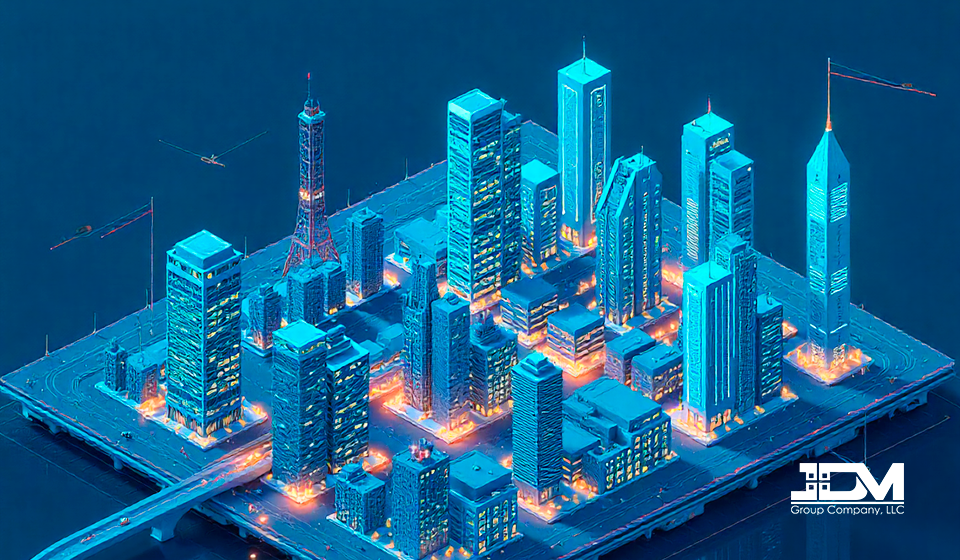
The world of construction and design has always evolved with technology, from the first sketches on paper to sophisticated BIM (Building Information Modeling) models. However, a new frontier has emerged, one that goes far beyond simple digital representation: Digital Twin technology. This innovation is not just a passing trend, but a fundamental shift in how we conceptualize, build, and manage our environment.
What Are Digital Twins?
At their core, a Digital Twin is a virtual and dynamic replica of a physical asset, process, or system. Unlike a static 3D model, a digital twin is fed by real-time data from sensors (IoT), drones, and other sources. This creates a two-way connection between the physical and virtual worlds, allowing professionals to monitor, analyze, and simulate the behavior of a structure or infrastructure throughout its entire lifecycle.
Transformative Applications in the Industry
The ability of digital twins to mirror reality in real-time unlocks a host of revolutionary possibilities for civil engineers and architects:
- Smart Urban Planning: Urban planners can create digital replicas of entire cities to simulate the impact of population growth, optimize traffic flow, and plan the distribution of public services before a single brick is laid.
- Infrastructure Management: The maintenance of bridges, roads, and tunnels shifts from reactive to predictive. Sensors on a structure send live data to the digital twin, alerting engineers to material fatigue or repair needs long before they become a critical problem.
- Efficient Construction: During the construction phase, digital twins allow for real-time monitoring of project progress. This makes it easier to detect potential conflicts, optimize schedules, and improve collaboration among all teams, significantly reducing costs and delays.
Benefits for Tomorrow’s Professional
For students and professionals in engineering and architecture, mastering this technology is not an option—it’s a necessity. Digital twins empower teams to make decisions based on concrete data, not assumptions. They allow for complex scenario analyses in a secure virtual environment, optimize the operational performance of built assets, and ultimately deliver more efficient, safe, and cost-effective solutions to clients.
The future of our built environment will not be limited to buildings and roads; it will include a smart digital layer that lives and evolves with them. Digital Twins are the key to unlocking this potential, and their integration with technologies like artificial intelligence and machine learning promises a new era of project design, innovation, and management. It is a field in constant growth, full of opportunities for those who are ready to build not only the present, but the future.